Speaking Question মুখস্থ করলেই কি Band 7 আসবে?
অনেক student Google-এ search করে: “100 most common IELTS Speaking questions” বা “recent IELTS Speaking questions”.
কিন্তু problem হলো—question list save করে রাখলেই Speaking improve হয় না।
IELTS Speaking test-এ examiner শুধু আপনার answer শুনবেন না; তিনি দেখবেন আপনি কতটা fluently, naturally, logically এবং accurately কথা বলতে পারেন। Official IELTS অনুযায়ী Speaking test সাধারণত 11–14 minutes হয় এবং 3 parts থাকে: Part 1 introduction/interview, Part 2 individual long turn, and Part 3 two-way discussion.
So, এই blog-এর 100 questions মুখস্থ করার জন্য না। এগুলো use করবেন idea, vocabulary, fluency and confidence build করার জন্য।
100 Most Common IELTS Speaking Questions কীভাবে Practice করবেন?
100 most common IELTS Speaking questions practice করার best way হলো question মুখস্থ না করে answer formula, idea bank, vocabulary, examples and recording practice use করা।
Part 1-এ answer হবে short but developed.
Part 2-এ story structure use করতে হবে.
Part 3-এ opinion + reason + example + result/balance দিতে হবে.
IELTS Speaking Part 2-এ আপনাকে cue card দেওয়া হয়, 1 minute preparation time থাকে, এবং আপনি topic নিয়ে up to 2 minutes কথা বলেন; Part 3-এ examiner Part 2 topic-এর সাথে related more abstract questions করেন.
Best practice method:
প্রতিদিন 10–15টি question answer করুন
নিজের answer record করুন
Answer too short কিনা check করুন
Same word repeat হচ্ছে কিনা দেখুন
Grammar mistake note করুন
Pronunciation clear কিনা শুনুন
Part 3-এ opinion explain করার habit করুন
IELTS Speaking Test Format: আগে Structure বুঝুন
IELTS Speaking test 3 parts-এ divided.
Part | Time | What Happens | Your Goal |
|---|---|---|---|
Part 1 | 4–5 minutes | Familiar questions about you | Short but extended answers |
Part 2 | 3–4 minutes | Cue card + 1 minute preparation + long answer | 1.5–2 minutes story-style answer |
Part 3 | 4–5 minutes | Broader discussion linked to Part 2 | Opinion, reason, example, analysis |
IELTS Speaking face-to-face হয় একজন certified examiner-এর সাথে, and the test checks your ability to communicate across familiar, personal and more abstract topics.
How to Use These 100 IELTS Speaking Questions
এই questionsগুলো তিনভাবে use করবেন।
Step 1: Don’t Memorise Full Answers
Full answer মুখস্থ করলে answer robotic লাগে। Examiner follow-up করলে আপনি আটকে যেতে পারেন।
Instead, prepare:
idea
vocabulary
example
story structure
opinion structure
Step 2: Use Simple Answer Formulas
Part 1 formula:
Answer + Reason + Example
Example:
Question: Do you like reading?
Answer: Yes, I do. I mostly read English learning and self-development books because they help me improve my vocabulary and confidence. For example, I often note down useful phrases and try to use them in speaking practice.
Part 2 formula:
When + Where + Who + What happened + Why important + How you felt
Part 3 formula:
Opinion + Reason + Example + Result/Balance
Step 3: Record and Review
প্রতিদিন 10 minutes recording practice করুন।
নিজের answer শুনে check করুন:
answer too short কিনা
hesitation বেশি কিনা
grammar mistake হচ্ছে কিনা
same word repeat হচ্ছে কিনা
pronunciation clear কিনা
100 Most Common IELTS Speaking Questions
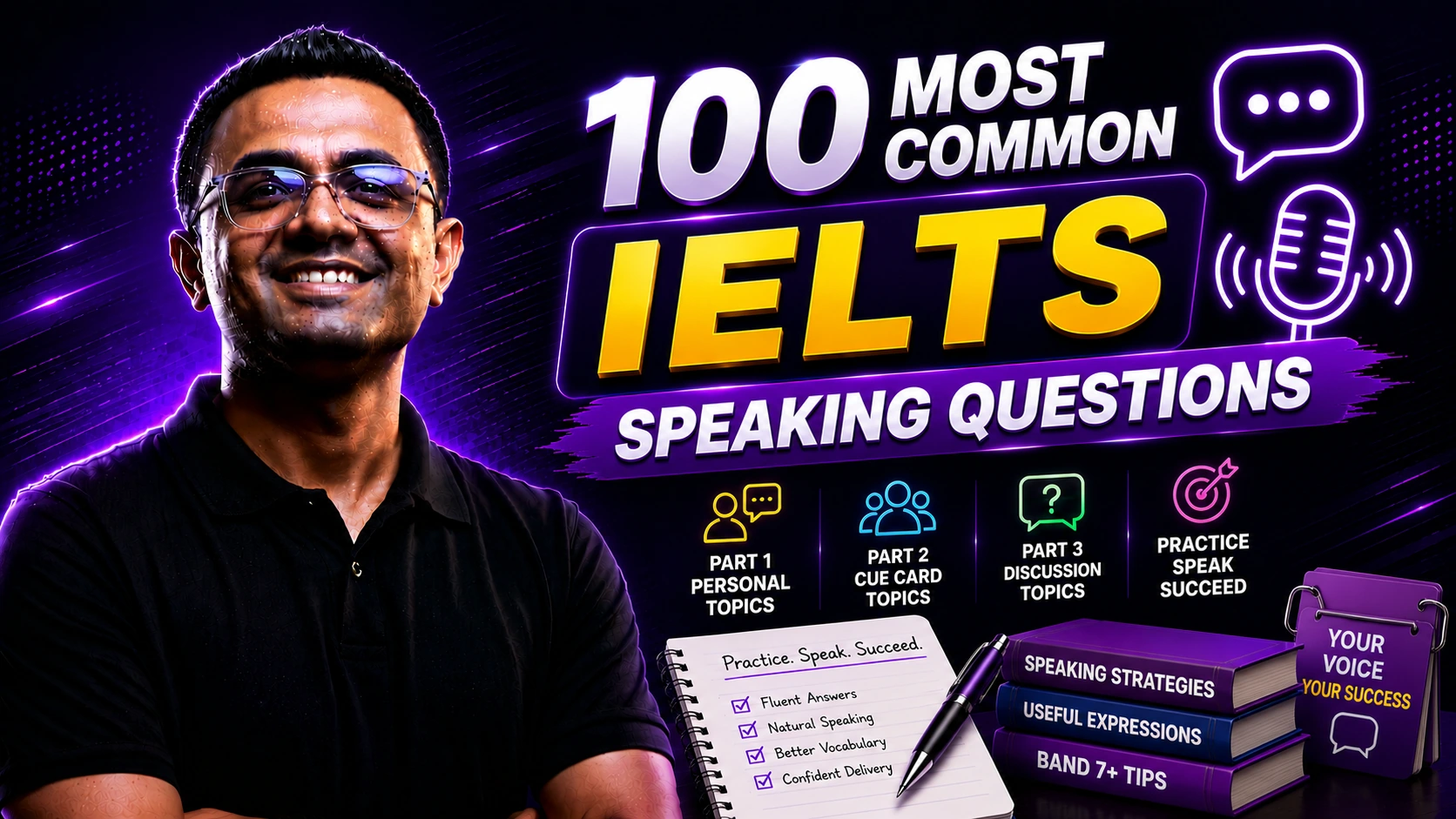
নিচের list-এ Part 1, Part 2 and Part 3 মিলিয়ে 100টি high-frequency IELTS Speaking practice question দেওয়া হলো।
এগুলো official question leak না। এগুলো common IELTS themes and practice patterns থেকে তৈরি, so এগুলো prediction হিসেবে না, preparation tool হিসেবে use করবেন।
IELTS Speaking Part 1 Questions
Part 1 usually familiar and personal. এখানে answer খুব বেশি long করা দরকার নেই। 2–4 sentences enough.
Home and Hometown
Where is your hometown?
Do you like your hometown?
What is your hometown famous for?
Has your hometown changed much in recent years?
Would you like to live in your hometown in the future?
Work or Study
Do you work or study?
What subject are you studying?
Why did you choose this subject?
Do you like your current job or study?
What is the most difficult part of your work or study?
Daily Routine
What do you usually do in the morning?
Do you prefer to study in the morning or at night?
Has your daily routine changed recently?
What part of the day do you like most?
Do you think having a routine is important?
Family and Friends
Do you spend much time with your family?
Who are you closest to in your family?
Do you prefer spending time with family or friends?
How often do you meet your friends?
What do you usually do with your friends?
Food and Cooking
What kind of food do you like?
Do you prefer homemade food or restaurant food?
Can you cook?
What food is popular in your country?
Do you think young people should learn cooking?
Books and Reading
Do you enjoy reading books?
What kind of books do you usually read?
Did you read books when you were a child?
Do you prefer printed books or e-books?
Why do some people not enjoy reading?
Technology and Apps
Do you often use mobile apps?
What app do you use most?
Do you think apps make life easier?
Do older people use apps in your country?
Can people become too dependent on technology?
Weather and Seasons
What kind of weather do you like?
What is the weather like in your country?
Do you prefer hot or cold weather?
Does weather affect your mood?
What do people usually do in rainy weather?
Clothes and Shopping
What kind of clothes do you usually wear?
Do you like shopping for clothes?
Do you prefer online shopping or shopping in stores?
Do you think fashion is important?
Have your clothing choices changed over time?
Hobbies and Free Time
What do you do in your free time?
Do you prefer indoor or outdoor activities?
Did you have any hobbies when you were a child?
Do you think hobbies are important?
Would you like to try a new hobby in the future?
IELTS Speaking Part 2 Cue Card Questions
Part 2-এ আপনাকে একটি cue card দেওয়া হবে। 1 minute note নেওয়ার সময় পাবেন। তারপর 1–2 minutes কথা বলতে হবে।
IELTS explains that using the points on the task card and making notes during the preparation time can help candidates structure their talk and keep speaking for up to 2 minutes.
People
Describe a person who has influenced you.
Describe a teacher you remember well.
Describe a friend who helped you.
Describe a successful person you know.
Describe an older person you respect.
Places
Describe a place in your hometown that you like.
Describe a quiet place you enjoy visiting.
Describe a city you would like to visit.
Describe a public place you recently visited.
Describe a place where you studied or worked.
Experiences
Describe a time when you solved a problem.
Describe a time when you felt proud.
Describe a time when you helped someone.
Describe a difficult decision you made.
Describe a time when you were late for something.
Objects and Technology
Describe a useful app you use.
Describe a piece of technology you often use.
Describe something you bought recently.
Describe a gift you received.
Describe an item that is important to you.
Events and Activities
Describe a festival or celebration you enjoyed.
Describe a memorable journey.
Describe a special meal you had.
Describe a sports event you watched.
Describe an important event in your life.
Learning and Skills
Describe a skill you learned.
Describe a subject you enjoyed at school.
Describe a book you enjoyed reading.
Describe something new you would like to learn.
Describe a time when you learned from a mistake.
IELTS Speaking Part 3 Questions
Part 3 questions are more abstract and discussion-based. এখানে personal story না, broader answer দরকার।
IELTS says Part 3 develops from Part 2 and asks candidates to discuss more abstract ideas and issues in greater depth.
Education
How has education changed in recent years?
Do you think online education is as effective as classroom learning?
Should schools teach practical life skills?
What makes a good teacher?
Why do some students lose motivation?
Technology
How has technology changed communication?
Do people depend too much on smartphones?
Should children be allowed to use digital devices?
How can technology help students learn?
What are the disadvantages of social media?
Work and Career
What is more important: salary or job satisfaction?
Why do some people change careers?
Is working from home a positive development?
What skills are important in the modern workplace?
Should companies provide training for employees?
Society and Lifestyle
Why are people becoming more stressed nowadays?
How can people maintain a healthy lifestyle?
Is public transport important in large cities?
Should governments protect traditional culture?
How can young people contribute to society?
Topic-wise Vocabulary for IELTS Speaking
Vocabulary should be natural, not forced. IELTS Speaking-এ difficult word use করলেই score বাড়ে না। Accurate and flexible vocabulary দরকার।
Education Vocabulary
online learning
classroom interaction
practical skills
academic performance
learning environment
student motivation
qualified teacher
flexible schedule
Example sentence:
Online learning is useful because it gives students more flexibility, especially those who live far from major cities.
Technology Vocabulary
digital platform
mobile application
screen time
online communication
data privacy
artificial intelligence
social media addiction
remote work
Example sentence:
Smartphones make communication faster, but excessive screen time can affect people’s health and concentration.
Work Vocabulary
job satisfaction
career growth
workplace pressure
professional development
communication skills
flexible working hours
teamwork
productivity
Example sentence:
Job satisfaction is important because people perform better when they feel valued and motivated.
Health Vocabulary
balanced diet
physical activity
mental health
stress management
healthy lifestyle
regular exercise
sleep routine
public health
Example sentence:
A healthy lifestyle depends not only on exercise but also on diet, sleep and stress management.
Band 7 Speaking Answer Formula
For Band 7, answer should be clear, developed and natural.
Part 1 Formula
Direct answer + reason + small example
Question: Do you like your hometown?
Answer:
Yes, I do. I like my hometown because it feels peaceful and familiar. Although it does not have all the facilities of a big city, I feel emotionally connected to it because I grew up there.
Part 2 Formula
Past background + main story + details + feeling + final thought
Cue card: Describe a teacher you remember well.
Answer start:
One teacher I remember very clearly is my English teacher from college. He was not only knowledgeable but also very supportive, especially towards students who were weak in English.
Part 3 Formula
Opinion + reason + example + balance/result
Question: Do you think online education will become more popular?
Answer:
Yes, I think online education will become more popular because it saves time and gives learners more flexibility. For example, many job holders in Bangladesh can attend IELTS classes online after office. However, it may not completely replace classroom learning because some students still need face-to-face interaction.
Common Mistakes in IELTS Speaking Practice
Mistake 1: Full Answer Memorise করা
Memorised answer unnatural sounds করে। Follow-up question করলে student stuck হয়ে যায়।
Mistake 2: Part 1-এ One-word Answer দেওয়া
Question: Do you like music?
Weak answer: Yes.
Better answer: Yes, I do. I usually listen to soft music when I study because it helps me concentrate.
Mistake 3: Part 2-এ Story Structure না রাখা
Cue card-এ random কথা বললে 2 minutes continue করা কঠিন হয়। Structure use করুন।
Mistake 4: Part 3-এ Personal Answer দেওয়া
Part 3 broader discussion চায়।
Weak: I like online classes.
Better: Online classes are useful for many students because they save time and make education more accessible.
Mistake 5: Difficult Vocabulary Force করা
Natural English better than forced advanced words.
Unnatural: I utilise my mobile device for multifarious purposes.
Better: I use my phone for communication, study and entertainment.
Mistake 6: Recording Practice না করা
নিজের answer record না করলে fluency, grammar and pronunciation problem বোঝা কঠিন।
7-Day IELTS Speaking Practice Plan
Day 1: Part 1 Personal Topics
Practise 20 questions from home, work/study, family and routine.
Day 2: Part 1 Lifestyle Topics
Practise food, weather, hobbies, clothes and technology.
Day 3: Part 2 People Cue Cards
Practise teacher, friend, successful person, older person.
Day 4: Part 2 Place Cue Cards
Practise hometown place, quiet place, city, public place.
Day 5: Part 2 Experience Cue Cards
Practise problem-solving, proud moment, helping someone, difficult decision.
Day 6: Part 3 Discussion
Practise education, technology, work and society questions.
Day 7: Full Mock Speaking
Do one full mock:
5 minutes Part 1
2 minutes Part 2
5 minutes Part 3
Record and review
EnglishA2Z IELTS Speaking Support
If you want to prepare these 100 most common IELTS Speaking questions with proper feedback, EnglishA2Z’s Online IELTS with Sabbir Sarkar can help.
EnglishA2Z’s course page highlights live online IELTS preparation, Bangla-English mode, Band 6 to 7+ strategy, real-time Speaking practice with live feedback, Writing Task 1 & 2 model structure, mock tests, eBooks, class recordings, and Sabbir Sarkar Sir’s 20+ years of teaching experience.
Online IELTS with Sabbir Sarkar
Course link: Online IELTS with Sabbir Sarkar
This course is helpful if:
Speaking-এ confidence কম
Part 2 cue card-এ 2 minutes কথা বলতে পারেন না
Part 3 answer short হয়ে যায়
Grammar and vocabulary mistake বেশি হয়
Band 6 থেকে 7+ যেতে চান
Mock Speaking feedback দরকার
Dhaka-র বাইরে থাকেন বা job holder
IELTS Preparation এর ১০০ তে ১০০ eBook
eBook link: IELTS Preparation এর ১০০ তে ১০০
Use this if you want a self-study IELTS roadmap before joining a course.
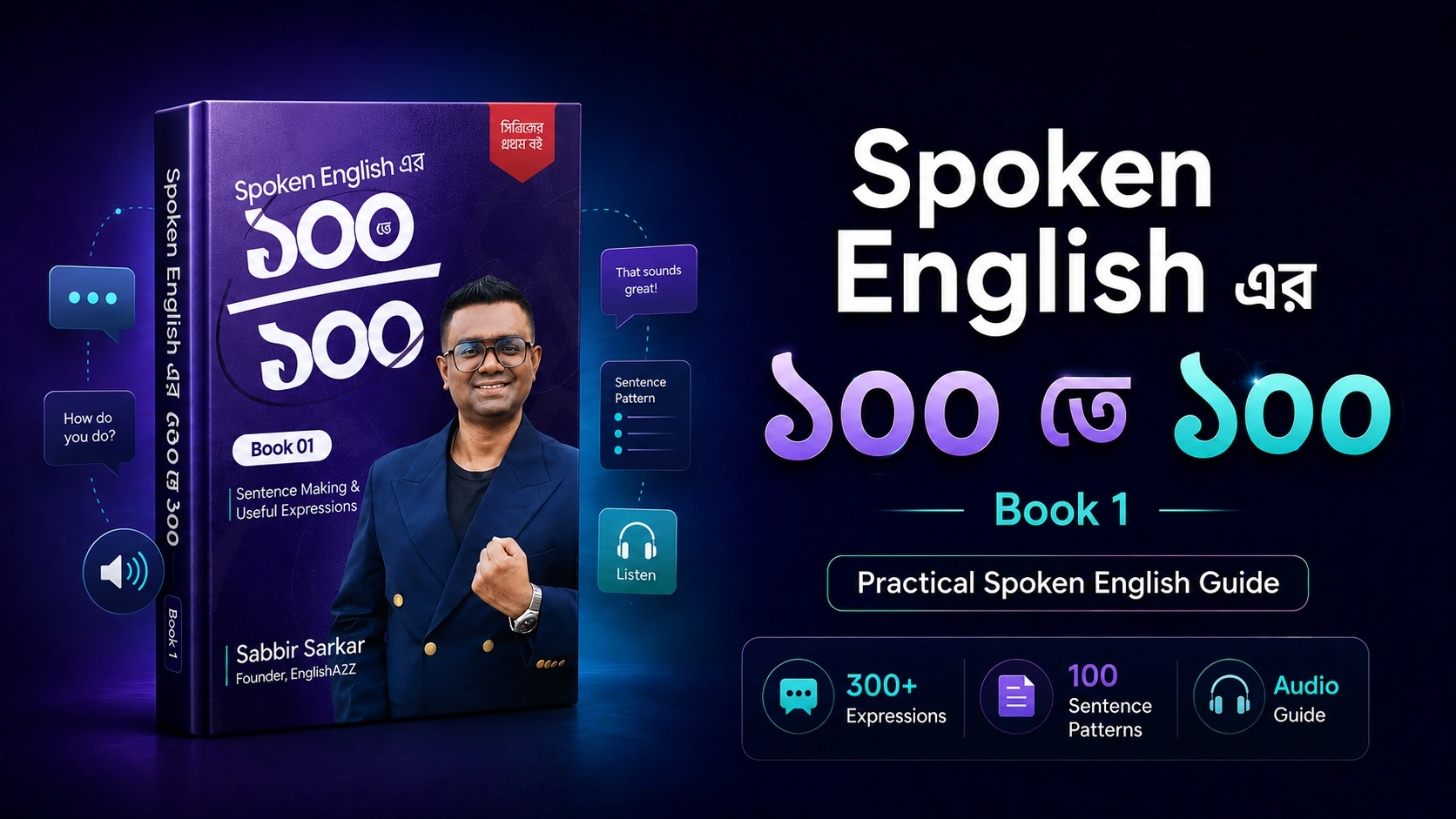
Spoken English এর ১০০ তে ১০০ eBook
eBook link: Spoken English এর ১০০ তে ১০০
EnglishA2Z’s Spoken English eBook page mentions 300+ real-world expressions and 100 sentence patterns with Bengali translation, which can help learners build speaking foundation and natural sentence formation.
100 Questions Practice করেও Fluency আসছে না?
Question list helpful, but feedback ছাড়া improvement slow হতে পারে।
If you are facing these problems:
answer short হয়ে যায়
cue card-এ আটকে যান
Part 3-এ idea আসে না
grammar mistake বেশি
pronunciation unclear
confidence কম
Then you need guided Speaking practice.
Start with:
100 Questions মুখস্থ না, Speaking System Build করুন
100 most common IELTS Speaking questions practice করা খুব useful, কিন্তু এগুলো মুখস্থ করার জন্য না।
Use these questions to build:
fluency
confidence
vocabulary
grammar control
idea development
cue card storytelling
Part 3 opinion structure
Remember: IELTS Speaking is not a memorisation test. It is a communication test.
If you practise these questions with recording, feedback and proper answer formulas, your Speaking confidence will improve much faster.
FAQs: 100 Most Common IELTS Speaking Questions
Are these 100 IELTS Speaking questions official?
No. These are common IELTS Speaking practice questions based on frequent IELTS themes. Official IELTS does not publish future questions for candidates to memorise.
Should I memorise IELTS Speaking answers?
No. You should not memorise full answers. Prepare ideas, vocabulary and examples instead.
How many IELTS Speaking questions should I practise daily?
Practise 10–15 questions daily. Record your answers and review fluency, grammar, vocabulary and pronunciation.
How can I answer Part 1 questions better?
Use the formula: answer + reason + small example. Avoid one-word answers.
How can I speak for 2 minutes in Part 2?
Use story structure: when, where, who, what happened, why it was important and how you felt.
How can I answer Part 3 questions?
Use opinion + reason + example + result/balance. Part 3 needs broader discussion, not only personal experience.
What is the best way to improve IELTS Speaking fluency?
Daily speaking practice, recording, self-review and feedback are the best ways to improve fluency.
Can EnglishA2Z help with IELTS Speaking?
Yes. Online IELTS with Sabbir Sarkar includes real-time Speaking practice with live feedback and Band 6 to 7+ IELTS preparation support.
Recommended EnglishA2Z Links
IELTS Course: Online IELTS with Sabbir Sarkar
IELTS eBook: IELTS Preparation এর ১০০ তে ১০০
Spoken English eBook: Spoken English এর ১০০ তে ১০০
Website: EnglishA2Z